
If your company still uses ISDN lines or physical primary rate interfaces, you are probably paying two or three times more than you would with an equivalent SIP trunk. But before migrating, it is worth understanding exactly what it is and what to ask the provider.
What is a SIP trunk?
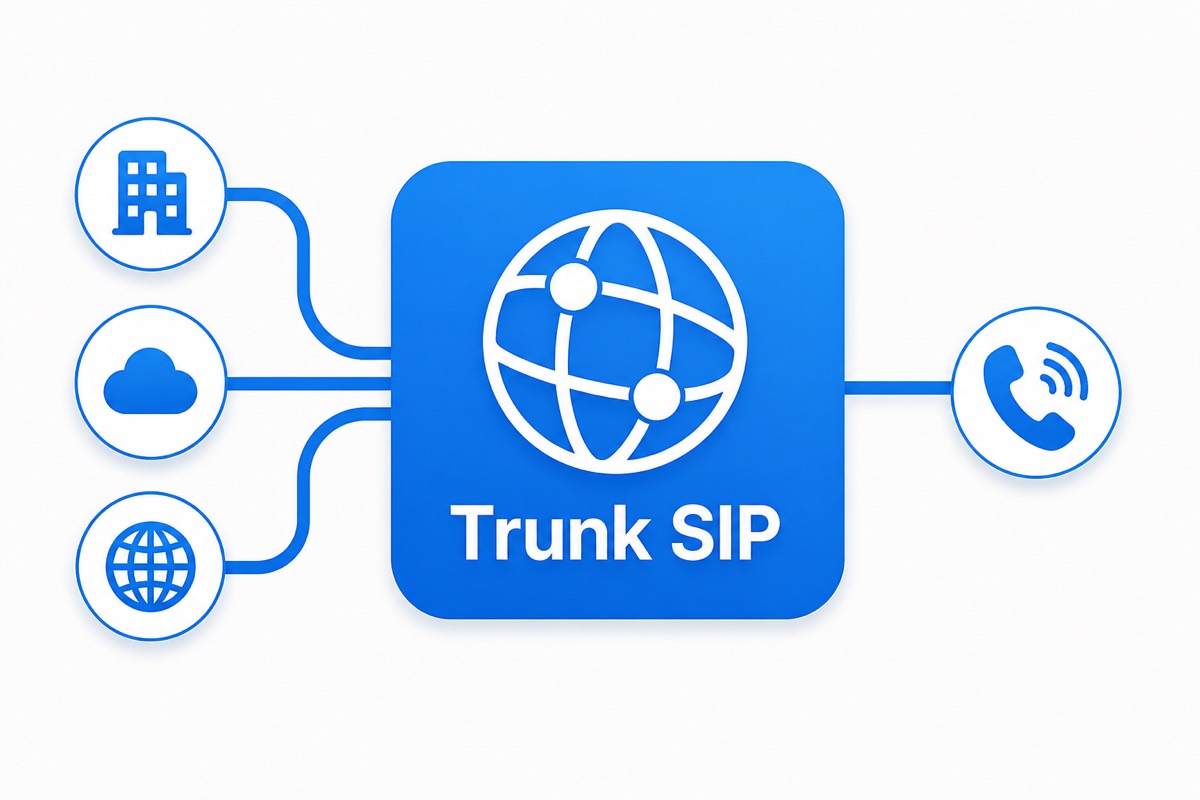
It is a virtual connection between your PBX, physical or virtual, and the operator, replacing traditional lines. Calls travel through that connection using the SIP protocol. No new cables, no physical cards: just internet.
What you gain by migrating
- Much lower cost per channel than a primary rate interface.
- Scalable channels: add capacity through configuration, not hardware.
- International calls at wholesale prices.
- Geographic numbers and 900 numbers without a traditional local operator setup.
5 questions to ask the provider
1. What SLA does the network have?
A serious standard is between 99.9% and 99.99%. Ask for it in writing, not just verbal promises.
2. Do they have direct interconnection with major operators?
The fewer hops, the better the voice quality and the fewer points of failure. Ask about direct terminations to Movistar, Vodafone, and Orange.
3. Which codecs are supported?
At minimum, G.711 (A-law and mu-law) and G.729. Ideally also HD codecs such as Opus or G.722 if you value quality.
4. How do they manage fraud?
A poorly protected SIP trunk can generate thousands of euros in fraudulent calls overnight. The provider should offer spending limits, destination blocking, and detection of unusual patterns.
5. Number portability?
Confirm that you keep your current number. Also ask for real timelines: a simple portability process usually takes 5-10 business days.
Common mistakes
- 1Migrating without auditing current traffic: if you do not know how many channels you really need, you buy too many or too few.
- 2Assuming the current router will cope: many consumer devices do not prioritize voice and quality suffers.
- 3Not testing before switching: ask for a coexistence period where both lines work in parallel.
“SIP trunking is not a new technology. What is new is that there is no technical excuse not to use it: the network, terminals, and providers are mature.”
— VoIPer network team
Do you need a serious SIP trunk?
We configure one with the capacity and codecs you need, with automatic failover if your fiber goes down.
See SIP Trunk→